


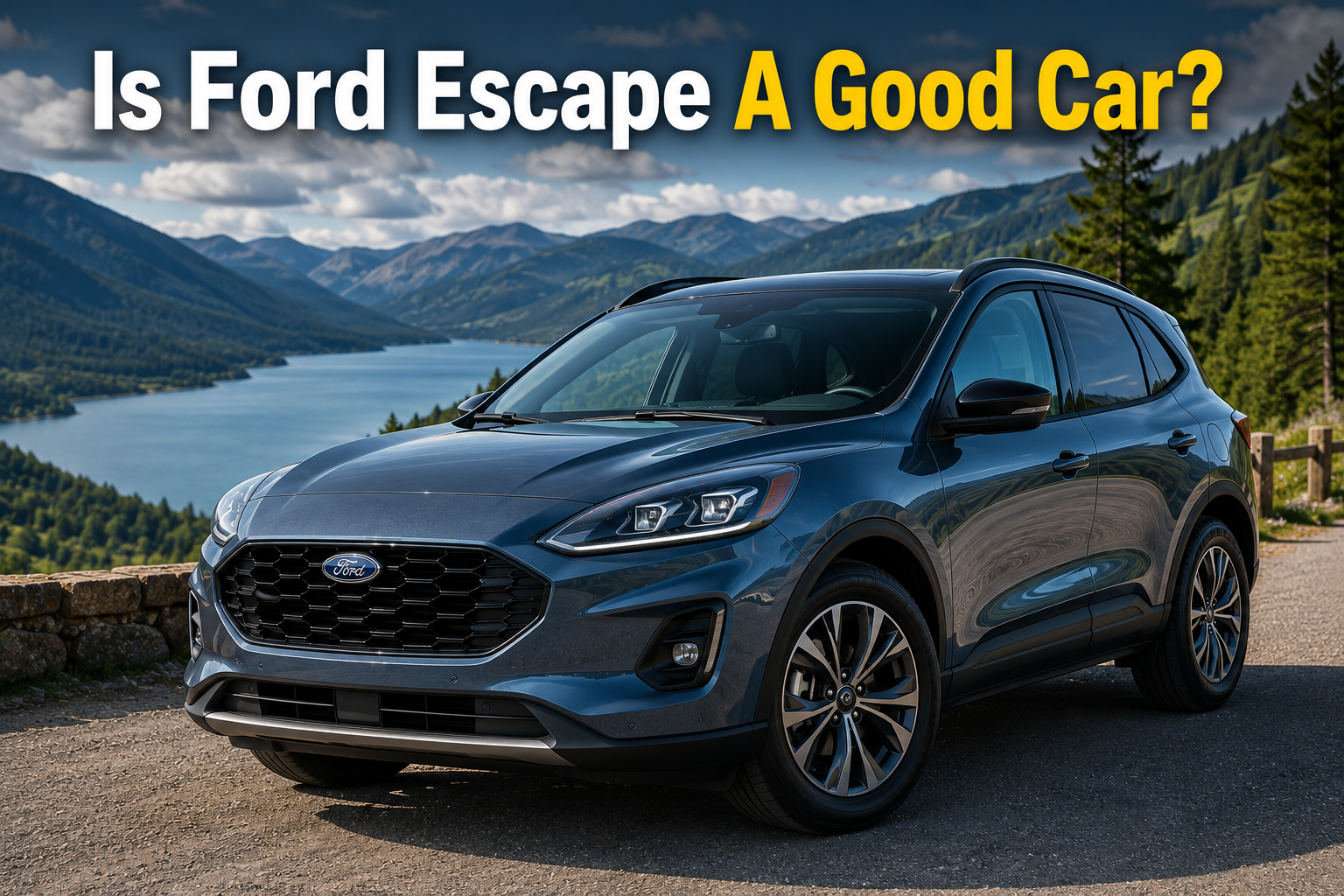
If you have been shopping around in the compact SUV segment, chances are the Ford Escape has landed on your shortlist. It is one of the most recognizable names in the crossover world, and it competes directly against heavyweights like the Toyota RAV4, Honda CR-V, and Hyundai Tucson. But the real question every buyer wants answered before signing on the dotted line is simple: is Ford Escape a good car worth your hard-earned money?
The short answer is yes, for most drivers the Ford Escape is a solid, dependable, and practical choice. It offers a comfortable ride, respectable fuel economy, a spacious cargo area, and a reasonably reliable ownership experience compared to the average vehicle on the road today. That said, like any car, it isn’t perfect, and there are a few things worth knowing before you commit. This guide walks through everything, from reliability data to real owner feedback, so you can make a fully informed decision.
Ford Escape At A Glance
The Ford Escape sits firmly in the compact SUV category, competing in one of the most crowded and competitive segments in the entire auto industry. The current generation, which debuted in 2020 and received a mid-cycle refresh in 2023, brought a more modern design language, updated technology, and a broader range of powertrain choices than earlier generations offered.
Buyers can choose between a standard gasoline engine, a traditional hybrid, or a plug-in hybrid variant, which makes the Escape unusually flexible for people who want the option of running on electric power for short commutes while still having a gas engine for longer road trips. Trim levels typically range from a value-focused base model up to a more feature-rich, near-luxury trim, so there is a version of the Escape for nearly every type of buyer, whether the priority is a low price tag or a fully loaded cabin.
The table below summarizes the core lineup at a glance.
| Feature | Details |
|---|---|
| Segment | Compact SUV |
| Current Generation | 4th generation (2020–present), facelifted in 2023 |
| Powertrain Options | Gasoline, Hybrid, Plug-in Hybrid (PHEV) |
| Seating | 5 passengers |
| Drivetrain | Front-wheel drive standard, all-wheel drive available |
| Main Competitors | Toyota RAV4, Honda CR-V, Hyundai Tucson, Mazda CX-50 |
Reliability: How Dependable Is The Ford Escape?
Reliability is usually the single biggest factor behind the question, is Ford Escape a good car, and it deserves the most attention. Independent data from sources that track long-term ownership patterns generally place the Escape in the “average to good” range when compared with other vehicles in its class.
Repair tracking services report that Escape owners bring their vehicles in for unscheduled repairs a little less than once every three years on average, which is roughly in line with the compact SUV segment as a whole. The probability that any given repair turns out to be a serious or major issue also sits close to the class average, suggesting that most problems owners encounter tend to be minor annoyances rather than expensive mechanical failures.
Reliability has also trended upward with each newer model year. Earlier versions of the current generation, particularly those built around 2020 to 2022, were more prone to rough shifting, hesitation during acceleration, and occasional infotainment glitches. Ford addressed many of these concerns through revised transmission calibration and over-the-air software updates, and the more recent model years reflect noticeably fewer complaints. If reliability is your top priority and you are shopping used, later model years generally represent the safer bet.
Common Reliability Concerns
While the Escape is not without its flaws, most reported issues fall into a few predictable categories rather than being scattered and unpredictable:
- Transmission hesitation or rough shifting, mostly reported in early fourth-generation models
- Minor infotainment glitches such as screen freezing or Bluetooth connection drops
- Occasional electrical system quirks, including sensor or wiring-related complaints
- A small number of powertrain-related recalls, including fuel system concerns on certain earlier model years
None of these issues are unusual for a mass-market SUV, and manufacturers across the industry deal with similar categories of complaints. The important takeaway is that the Escape’s reliability profile has been improving steadily rather than declining, which is a positive signal for anyone considering a newer or current-year model.
Performance And Driving Experience
On the road, the Ford Escape delivers a driving experience that prioritizes comfort and ease of use over outright excitement. The base engine provides adequate power for daily commuting and highway merging, while the optional turbocharged engine offers noticeably stronger acceleration for drivers who want a bit more punch when passing or merging onto the highway.
The ride quality is tuned to soak up bumps and rough pavement, making the Escape a comfortable companion for daily errands and longer road trips alike. Handling is competent without being especially engaging, which fits the expectations of most compact SUV buyers who care more about practicality than performance. The transmission in later model years shifts more smoothly than in the SUV’s earlier years, addressing one of the more common early complaints.
Fuel economy is one of the Escape’s stronger selling points. The standard hybrid version delivers excellent efficiency for a vehicle of its size, making it an appealing option for buyers who drive frequently in stop-and-go city traffic. The plug-in hybrid variant goes a step further, allowing many owners to complete daily commutes almost entirely on electric power before the gasoline engine ever needs to kick in.
Interior And Comfort
Step inside the Escape and you will find a cabin that leans practical rather than luxurious. Some reviewers have pointed out that certain trims include more hard plastic than rivals in the same price range, which can make the interior feel slightly less premium at first glance. That said, the seats are generally comfortable for both short errands and long drives, and the cabin does a reasonable job of insulating occupants from road and wind noise.
Cargo space is genuinely one of the Escape’s strongest attributes. The rear seats fold down to create a flat and spacious loading area, which makes the vehicle well suited to grocery runs, weekend getaways, or hauling larger items. Rear passenger space is comfortable for most adults, though taller passengers in the third row of larger competitors may find more room elsewhere, since the Escape does not offer a third-row option.
Technology And Infotainment
The Escape comes equipped with Ford’s SYNC infotainment system, which most drivers find intuitive and easy to navigate from the driver’s seat. The touchscreen responds quickly, and the menu layout is logical enough that new owners rarely need more than a few days to feel comfortable with it.
Driver-assistance technology is another area where the Escape holds its own. Depending on the trim, features such as adaptive cruise control, lane-keeping assistance, automatic emergency braking, and blind-spot monitoring are available, bringing the Escape’s tech offering in line with what buyers expect from a modern compact SUV.
A small number of owners have reported occasional software hiccups, such as the screen freezing momentarily or Bluetooth pairing issues. These complaints are relatively common across nearly all modern infotainment systems industry-wide, and Ford’s ability to push over-the-air updates means many of these problems can be resolved without a trip to the dealership.
Safety Ratings
Safety is another area where the Escape performs respectably. Independent crash testing has awarded the Escape strong marks in frontal crash categories, though its side-impact rating has occasionally trailed some competitors. Headlight performance has been rated favorably as well, which is a detail that is often overlooked but genuinely impacts real-world nighttime visibility and safety.
Standard and available safety features generally include:
- Forward collision warning with automatic emergency braking
- Lane-keeping assist and lane departure warning
- Blind-spot monitoring with cross-traffic alert
- Adaptive cruise control (available on higher trims)
- Rearview camera as standard equipment
Cost Of Ownership
When evaluating whether the Ford Escape is a good car, it is worth looking beyond the sticker price to the total cost of ownership. Average annual repair costs for the Escape run slightly above the compact SUV segment average, though not dramatically so. Routine maintenance costs remain reasonable, and the hybrid and plug-in hybrid versions can meaningfully lower fuel expenses over time, particularly for drivers with shorter daily commutes.
Insurance costs tend to fall in line with other compact SUVs in its class, and resale value has historically been respectable, helped along by the Escape’s long-standing brand recognition and steady demand in the used car market.
What Real Owners Are Saying
Owner feedback on the Ford Escape is generally positive, though opinions vary depending on model year and trim level. Many drivers praise the vehicle’s fuel efficiency, comfortable ride quality, and user-friendly technology. A notable share of owners specifically highlight the hybrid powertrain as a standout feature, citing low fuel costs and smooth power delivery.
On the other hand, a smaller group of owners have reported dissatisfaction, particularly with base trims that feel underequipped for their price, along with occasional mentions of infotainment glitches or transmission concerns on earlier model years. As with most vehicles, individual experiences can vary based on how the car is maintained and driven, but the overall sentiment among Escape owners leans favorable.
Ford Escape Versus The Competition
To fully answer the question, is Ford Escape a good car, it helps to see how it stacks up against its closest rivals.
| Model | Reliability | Fuel Economy | Interior Quality | Cargo Space |
|---|---|---|---|---|
| Ford Escape | Average to Good | Very Good (Hybrid/PHEV) | Good, some hard plastics | Excellent |
| Toyota RAV4 | Very Good | Very Good | Good | Very Good |
| Honda CR-V | Very Good | Good | Excellent | Very Good |
| Hyundai Tucson | Good | Good | Very Good | Good |
| Mazda CX-50 | Good | Average | Excellent | Good |
As the comparison shows, the Escape holds its own in most categories and genuinely leads the pack in cargo versatility and hybrid fuel economy, even if it trails slightly behind class leaders like the RAV4 and CR-V in outright reliability reputation.
Pros And Cons Of The Ford Escape
Advantages
- Strong fuel economy, especially in hybrid and plug-in hybrid form
- Spacious and versatile cargo area
- User-friendly infotainment system
- Comfortable ride quality for daily driving
- Reasonable pricing relative to features offered
Disadvantages
- Some trims feature noticeably hard interior plastics
- Driving dynamics are competent but not particularly exciting
- Early model years had more reported transmission issues
- Side-impact crash test scores trail some competitors
Who Should Consider Buying A Ford Escape?
The Ford Escape is best suited to buyers who value practicality, fuel efficiency, and cargo flexibility over sporty handling or a premium cabin feel. Commuters who want the flexibility of a plug-in hybrid, families who need a reliable and roomy daily driver, and buyers who prioritize value over outright luxury will likely find the Escape to be a strong match for their needs.
If your priority list leans heavily toward top-tier reliability scores or the most refined interior in the segment, it may be worth cross-shopping against the Toyota RAV4 or Honda CR-V before making a final decision. However, for the vast majority of everyday drivers, the Escape delivers a well-rounded and dependable ownership experience.
Final Verdict: Is Ford Escape A Good Car?
After examining reliability data, performance characteristics, interior comfort, technology, safety ratings, and real owner feedback, the answer to is Ford Escape a good car is a confident yes for most buyers. It is not the flashiest or most luxurious vehicle in its class, but it consistently delivers where it matters most: dependable daily performance, strong fuel economy, generous cargo space, and a reasonable overall cost of ownership.
Newer model years, particularly those from 2023 onward, address many of the concerns that affected earlier versions of the current generation, making them the smartest pick for buyers prioritizing reliability. Whether you are considering a gasoline, hybrid, or plug-in hybrid model, the Ford Escape remains a genuinely competitive and sensible choice in the compact SUV market.
Frequently Asked Questions
Is the Ford Escape good for long road trips? Yes, the Escape offers a comfortable ride, decent fuel economy, and ample cargo space, making it a practical choice for longer drives.
How many years does a Ford Escape typically last? With proper maintenance, many Escape owners report well over 150,000 miles of reliable service, and some report significantly more.
Is the hybrid Ford Escape worth the extra cost? For drivers who cover significant daily mileage, the hybrid’s fuel savings often justify the price difference over a few years of ownership.
Which Ford Escape model year is the most reliable? Recent model years, particularly 2023 through 2025, generally show fewer reported issues than the earlier 2020 to 2022 model years.
Related Articles
Why Don’t Ford MAF Engines Use a MAP Sensor? Complete Explanation
How Much Does a Ford F150 Weigh? Full Weight Guide by Trim, Cab & Engine
Is Ford American Made? The Complete Truth About Ford’s Manufacturing
How To Change Battery In Ford Key Fob? Easy Step-by-Step Guide