




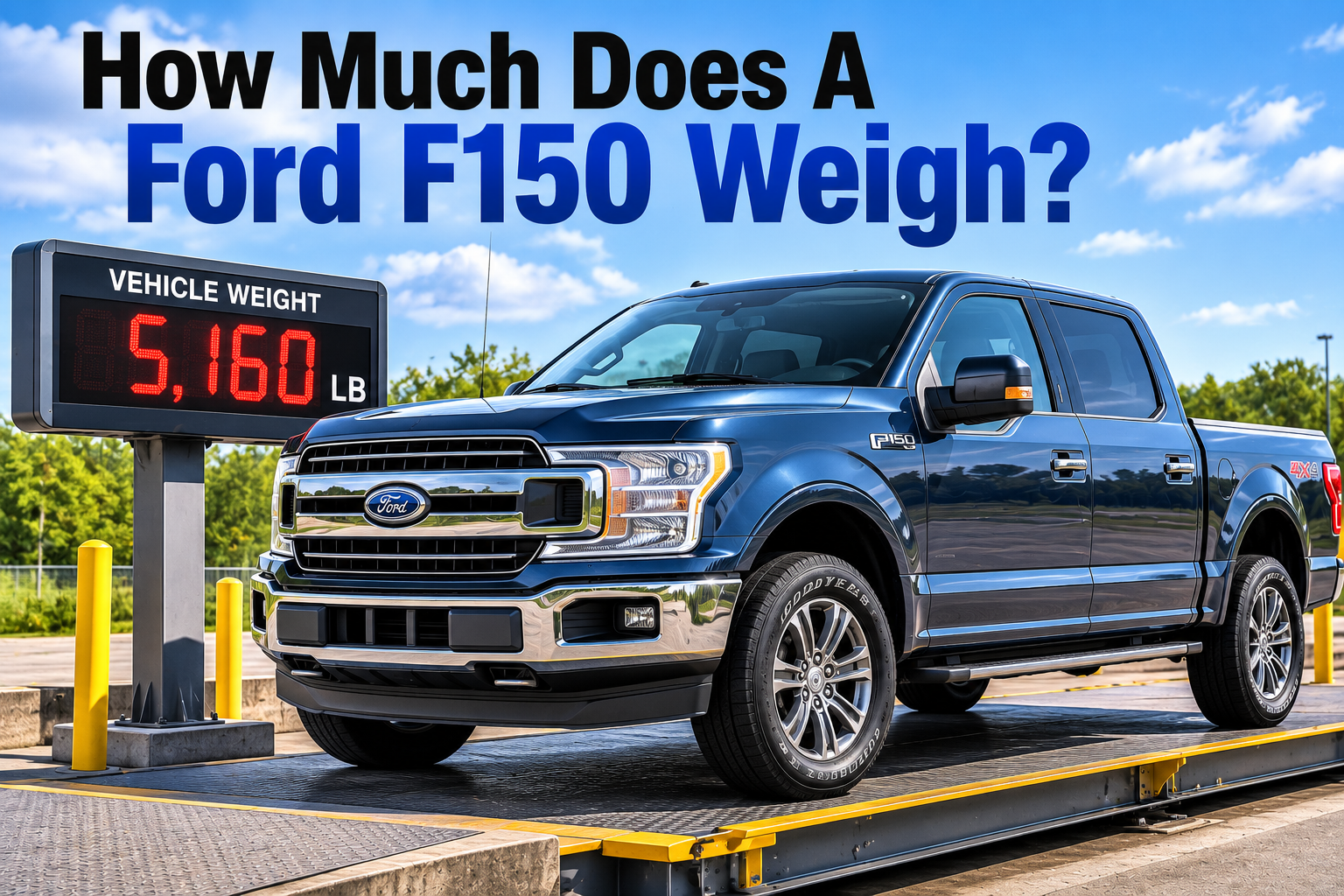
If you are shopping for a new truck, planning a big towing job, or simply curious about your vehicle’s specifications, you have probably asked yourself: how much does a Ford F150 weigh? It is one of the most common questions truck owners and buyers search for, and the answer is not as simple as a single number. The weight of a Ford F150 changes depending on several factors, including the model year, cab style, bed length, engine choice, trim level, and whether the truck is two-wheel drive or four-wheel drive.
In this guide, we will break down everything you need to know about Ford F150 weight in plain, easy-to-understand language. By the end, you will know exactly how much your F150 weighs, why that number matters, and how it compares to other trucks in its class.
Understanding Truck Weight Terminology
Before diving into exact figures, it helps to understand the different terms used when talking about truck weight. People often mix these up, which leads to confusion when comparing specs.
Curb Weight refers to how much the truck weighs when it is sitting empty, with a full tank of fuel and all standard equipment, but without any passengers or cargo. This is the number most people mean when they ask how much does a Ford F150 weigh.
Gross Vehicle Weight Rating (GVWR) is the maximum total weight the truck can safely carry, including the truck itself, passengers, fuel, and cargo. This number is set by the manufacturer and should never be exceeded.
Gross Combined Weight Rating (GCWR) covers the maximum combined weight of the truck plus anything it is towing, such as a trailer.
Payload Capacity tells you how much weight you can add to the truck itself, including passengers and cargo in the bed, before hitting the GVWR limit.
Towing Capacity indicates how much weight the truck can safely pull behind it using a trailer or hitch.
Knowing these terms helps you understand why a truck’s “weight” can mean different things depending on the context.
Ford F150 Curb Weight by Generation
Ford has updated the F150 many times over the decades, and each generation brought changes to materials, frame design, and technology that affected overall weight. Since the 2015 redesign introduced an aluminum body, weight has generally trended lower compared to older steel-bodied trucks, despite added technology.
| Generation | Model Years | Approximate Curb Weight Range |
|---|---|---|
| 13th Generation | 2021–Present | 4,021 – 5,697 lbs |
| 12th Generation | 2015–2020 | 4,069 – 5,697 lbs |
| 11th Generation | 2009–2014 | 4,675 – 5,864 lbs |
| Older Generations | Pre-2009 | 4,700 – 5,900 lbs (varies widely) |
As you can see, newer generations are not dramatically lighter overall, but the aluminum body construction introduced in 2015 helped offset the added weight of new safety features, larger engines, and modern infotainment systems.
Weight by Cab Style
The cab style you choose has a noticeable impact on how much your Ford F150 weighs, since a larger cab means more metal, glass, seating, and structural support.
The Regular Cab is the lightest configuration. It seats two to three people and has the smallest footprint, making it popular with contractors and fleet buyers who prioritize cargo space over passenger room.
The SuperCab adds rear-hinged half doors and a small back seat, increasing both length and weight compared to the Regular Cab.
The SuperCrew is the largest and heaviest cab option, featuring four full-size doors and a spacious rear seat. This is the most popular configuration for families and those who need to carry passengers regularly.
Generally speaking, moving from a Regular Cab to a SuperCrew can add several hundred pounds to the truck’s total curb weight.
Weight by Bed Length
Bed length also plays a role, though its effect on weight is smaller compared to cab style or engine choice. Ford offers the F150 with three primary bed lengths.
- The 5.5-foot bed is the shortest and lightest option, often paired with the SuperCrew cab for a balance of passenger space and maneuverability.
- The 6.5-foot bed offers a middle ground and is commonly paired with SuperCab configurations.
- The 8-foot bed is the longest and adds the most weight, favored by those who regularly haul large equipment or building materials.
Weight by Engine Type
Engine choice is one of the biggest factors affecting how much a Ford F150 weighs, since larger engines and their supporting components add mass to the front of the vehicle.
| Engine Option | Approximate Added Weight vs Base Engine |
|---|---|
| 3.3L V6 (base) | Baseline |
| 2.7L EcoBoost V6 | +50 to 100 lbs |
| 5.0L V8 | +150 to 250 lbs |
| 3.5L EcoBoost V6 | +100 to 200 lbs |
| PowerBoost Hybrid | +400 to 500 lbs |
| Raptor High-Output Engine | +500 to 700 lbs |
The PowerBoost Hybrid and Raptor engines add the most weight due to their additional battery systems, reinforced components, and performance-oriented hardware. If fuel efficiency and a lighter overall truck are priorities, the base V6 or EcoBoost options tend to be the better choice.
Weight by Trim Level
Trim level affects weight mainly through the addition of comfort features, sound insulation, larger wheels, and technology packages rather than structural changes.
The XL trim is the most basic and lightest option, designed for work use with minimal added features.
The XLT trim adds a bit more comfort and convenience equipment, slightly increasing weight.
The Lariat trim introduces more premium materials, additional insulation, and tech features, adding further weight.
The King Ranch and Platinum trims are among the heaviest due to leather upholstery, larger infotainment displays, and additional sound-deadening materials.
The Limited trim, Ford’s top-tier luxury option, tends to be one of the heaviest standard F150 configurations because of its extensive feature list.
The Raptor and Raptor R are unique cases. While they are performance trims, they are significantly heavier than standard trims due to reinforced suspension components, skid plates, larger tires, and, in the Raptor R’s case, a supercharged V8 engine.
Weight by Drivetrain: 4×2 vs 4×4
Whether your F150 is two-wheel drive or four-wheel drive also affects its total weight. Four-wheel drive systems include additional components such as a transfer case, front differential, and extra driveshafts, all of which add mass.
| Drivetrain | Typical Weight Difference |
|---|---|
| 4×2 (Two-Wheel Drive) | Baseline |
| 4×4 (Four-Wheel Drive) | +200 to 300 lbs heavier |
If minimizing weight is a priority, a 4×2 configuration will generally be lighter than an identical 4×4 model.
GVWR and Payload Capacity Explained
Understanding your specific truck’s GVWR is just as important as knowing its curb weight, especially if you plan to load it with cargo or passengers regularly. To calculate your available payload capacity, subtract the curb weight from the GVWR.
For example, if your F150 has a curb weight of 4,700 lbs and a GVWR of 7,000 lbs, your payload capacity would be approximately 2,300 lbs. This number includes passengers, cargo, and any accessories added after purchase.
You can find your specific truck’s GVWR on the yellow certification label located on the driver’s side door jamb. This label also lists the maximum weight allowed on the front and rear axles individually.
How Ford F150 Weight Compares to Other Trucks
When people ask how much does a Ford F150 weigh, they are often also curious how it stacks up against competing full-size trucks. Here is a general comparison of curb weight ranges among popular half-ton trucks.
| Truck Model | Approximate Curb Weight Range |
|---|---|
| Ford F150 | 4,021 – 5,697 lbs |
| Chevrolet Silverado 1500 | 4,175 – 5,485 lbs |
| Ram 1500 | 4,725 – 5,791 lbs |
| Toyota Tundra | 4,910 – 6,065 lbs |
| GMC Sierra 1500 | 4,280 – 5,490 lbs |
The Ford F150 tends to sit on the lighter end of the spectrum among full-size trucks, largely thanks to its aluminum body panels, which help offset the weight of larger engines and added technology.
Why Truck Weight Matters
Understanding how much your Ford F150 weighs is not just trivia. It has real practical implications for ownership and daily use.
Fuel efficiency is directly tied to weight, since heavier trucks require more energy to accelerate and maintain speed, leading to lower miles per gallon.
Towing safety depends heavily on knowing your truck’s GCWR and staying within safe limits, since overloading a truck can affect braking distance, handling, and long-term mechanical wear.
Off-road performance can be influenced by weight distribution, with lighter trucks generally having an easier time navigating soft terrain like sand or mud.
Road and bridge weight restrictions exist in many areas, and knowing your truck’s total loaded weight helps you avoid fines or safety issues when crossing weight-restricted infrastructure.
Commercial driving license requirements can also come into play. While most standard F150 configurations do not require a special license, heavily modified trucks or those towing large trailers may push combined weight into ranges that require additional certification depending on your state or region.
How to Find Your Exact F150’s Weight
If you want the precise weight of your specific truck rather than a general range, there are a few reliable ways to find it.
The door jamb sticker on the driver’s side provides the GVWR, front and rear axle weight ratings, and tire specifications.
The owner’s manual that came with your truck lists detailed specifications for your exact trim, engine, and configuration.
Ford’s official website allows you to look up specifications by model year and configuration for the most accurate factory numbers.
Visiting a certified truck scale, such as a CAT scale found at many truck stops, will give you the actual real-world weight of your truck as it currently sits, including any aftermarket modifications, accessories, or cargo.
Frequently Asked Questions
What is the lightest Ford F150 model? The lightest configuration is typically a Regular Cab, 4×2, XL trim with the base V6 engine and shortest bed length, weighing around 4,021 lbs.
What is the heaviest Ford F150 model? The heaviest standard configurations are usually SuperCrew, 4×4 models with the PowerBoost Hybrid engine or the Raptor R, which can weigh close to 5,900 lbs or more.
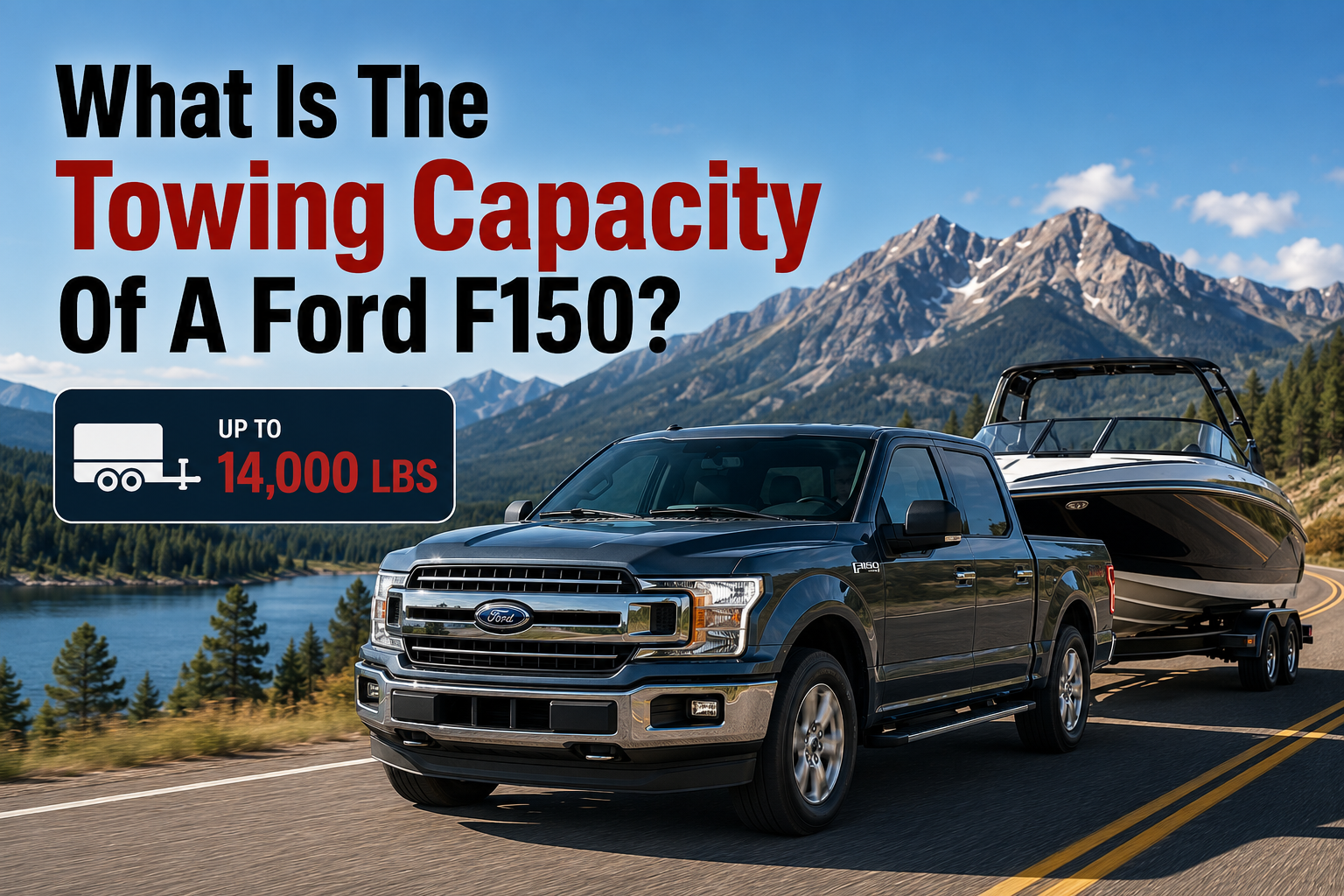
How much can an F150 tow based on its weight? Towing capacity varies significantly by configuration, ranging from around 5,000 lbs on lighter setups to over 13,000 lbs on properly equipped heavy-duty trims with the Max Trailer Tow package.
Does weight affect gas mileage? Yes, heavier configurations generally see lower fuel economy compared to lighter trims with smaller engines, since more energy is required to move additional mass.
Conclusion
So, how much does a Ford F150 weigh? As you have seen, the answer depends on multiple factors including generation, cab style, bed length, engine choice, trim level, and drivetrain. Curb weight for most F150 models falls somewhere between roughly 4,021 and 5,697 lbs, though heavier hybrid and performance variants can push closer to 5,900 lbs.
If you are choosing a truck based on weight considerations, whether for fuel efficiency, payload needs, or towing requirements, it is worth checking the exact specifications for your desired configuration using the door jamb sticker, owner’s manual, or Ford’s official resources. This ensures you get accurate numbers tailored to your specific truck rather than relying on general averages alone.
Related Articles
Is Ford American Made? The Complete Truth About Ford’s Manufacturing
How To Change Battery In Ford Key Fob? Easy Step-by-Step Guide