




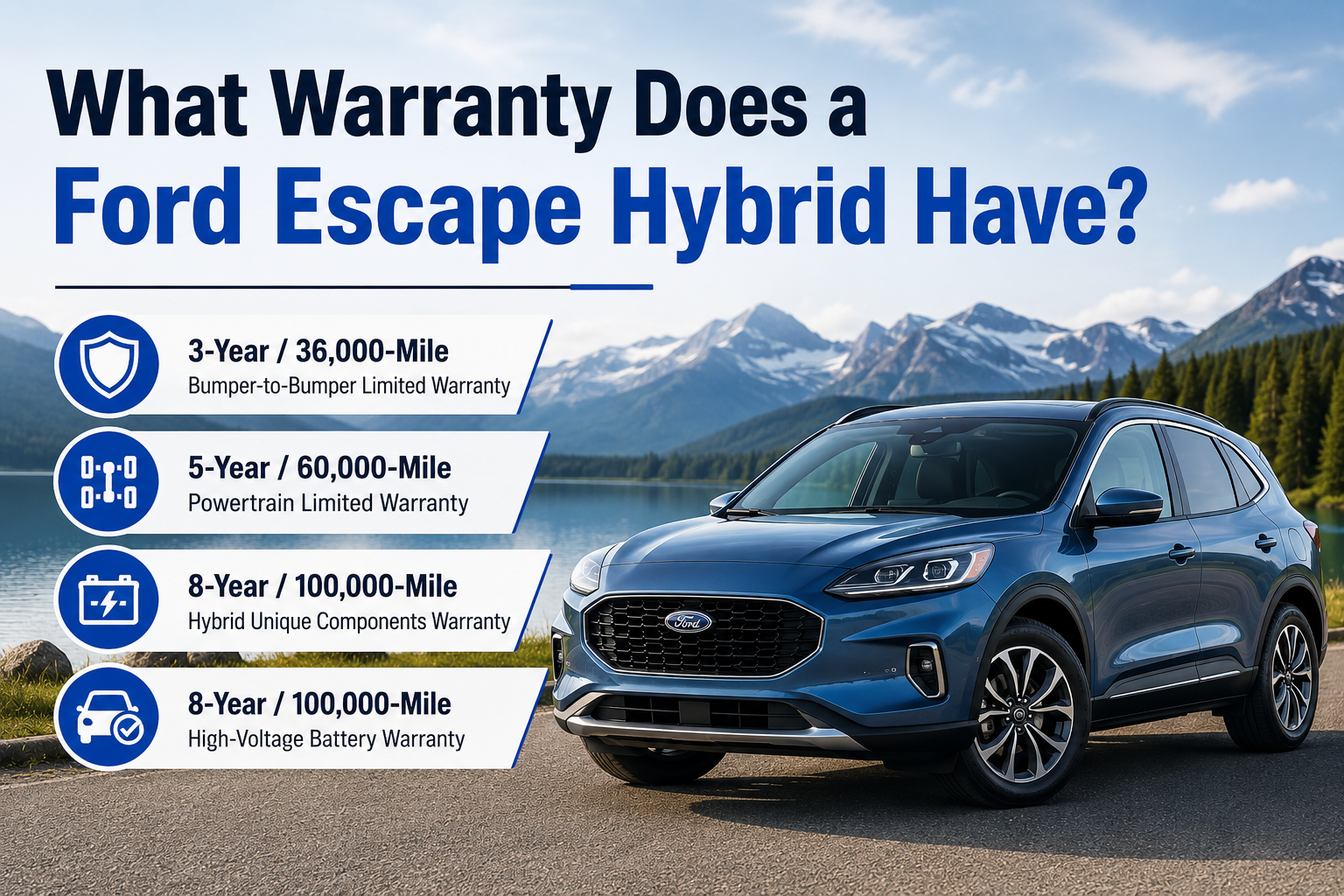
A new Ford Escape Hybrid comes with a layered factory warranty. The headline terms are 3 years or 36,000 miles of bumper-to-bumper coverage, 5 years or 60,000 miles of powertrain coverage, and 8 years or 100,000 miles of coverage on the hybrid-specific components, including the high-voltage battery. Whichever limit comes first ends that piece of coverage, and all of it carries no deductible.
That hybrid-component coverage is the part most buyers care about, since the battery is the priciest thing that could fail. Ford backs it for a full eight years or 100,000 miles, which is standard for the industry and a strong safety net. Below is the complete breakdown of every layer, what falls outside it, one important wrinkle for certain states, and how to extend protection if you plan to keep the vehicle a long time.
The full coverage breakdown
The Escape Hybrid’s new-vehicle warranty is really several warranties stacked together, each with its own length. Here is the whole set at a glance:
| Coverage | Years | Miles |
| Bumper-to-bumper (comprehensive) | 3 years | 36,000 |
| Powertrain | 5 years | 60,000 |
| Hybrid unique components (incl. high-voltage battery) | 8 years | 100,000 |
| Safety restraint system | 5 years | 60,000 |
| Corrosion (perforation) | 5 years | Unlimited |
| Roadside assistance | 5 years | 60,000 |
Every one of these runs from the vehicle’s warranty start date, which is normally the day it was first delivered or put into service, and each ends at whichever comes first, the years or the miles. Because they are separate, a component’s coverage depends on which bucket it falls into. A cabin rattle is a bumper-to-bumper item and covered for three years; the transmission is a powertrain item covered for five; the hybrid battery is covered for eight. Knowing which layer applies tells you how long you are protected for any given repair.
It is worth understanding how these layers overlap in practice. During the first three years and 36,000 miles, nearly everything is covered at once, since the bumper-to-bumper warranty is active alongside the longer powertrain and hybrid terms. After that first layer ends, you keep the powertrain and hybrid protection but lose coverage on smaller items like electronics, trim, and accessories. This is why the years right after the bumper-to-bumper period ends are when owners start paying out of pocket for the odd sensor or interior part, even though the big-ticket mechanical and hybrid pieces are still protected. It is a normal pattern for any modern vehicle, and planning around it helps you decide whether extended coverage is worth it.
The hybrid battery and hybrid-specific coverage
The 8-year/100,000-mile coverage is the one that sets a hybrid apart from a gas-only Escape, and it covers more than just the battery pack. Ford’s hybrid unique components warranty applies to the parts that make the hybrid system work: the high-voltage battery, the inverter, the battery cooling system, and the battery management electronics. If any of those fail from a defect in materials or workmanship within the term, the repair is covered.
This matters because those are exactly the components that would be expensive to replace out of pocket. Eight years and 100,000 miles is long enough that most owners will never pay for a hybrid-system repair while they own the vehicle. It is worth knowing one limit, though: the high-voltage battery is not covered if it is damaged by improper storage, so if you ever store the vehicle long-term, follow the procedure in the owner’s manual to keep that coverage intact.
The rest of the powertrain, the engine and transmission, falls under the standard 5-year/60,000-mile powertrain warranty rather than the hybrid term. So the hybrid pieces get the longest protection, while the conventional mechanical parts get the normal powertrain coverage. Both apply at once, each to its own set of parts.
What the warranty does not cover?
Like any factory warranty, this one covers defects, not wear and tear or damage. The things you should still expect to pay for include:
- Routine maintenance: oil changes, fluid services, filters, and inspections.
- Wear items: brake pads and rotors, wiper blades, and tires. Tires are typically handled separately under the tire maker’s own warranty.
- Damage from accidents, misuse, or lack of maintenance, and anything altered by non-Ford modifications.
- Environmental damage such as hail, flooding, or road-salt corrosion beyond the perforation the corrosion warranty covers.
The corrosion coverage is worth reading carefully. It runs 5 years with unlimited miles, but it covers perforation, meaning rust that eats all the way through a body panel, not surface rust or cosmetic corrosion. That is a narrower promise than it first sounds, so keeping the body clean, especially in salt regions, is still on you.
The emissions warranty wrinkle in some states
Here is a detail many owners miss, and it can be valuable. In states that follow California emissions standards, hybrids and plug-in hybrids are classified as partial or transitional zero-emission vehicles, and that brings a much longer emissions warranty: up to 15 years or 150,000 miles on emissions-related components.
For a hybrid, the emissions system reaches into a lot of the powertrain, so parts tied to it can carry that extended coverage well beyond the standard warranty terms. Which components qualify depends on your specific vehicle and state, so this is exactly the kind of thing to confirm with Ford or your dealer rather than assume. If you live in a California-standard state and run into a powertrain or emissions issue after the normal warranty ends, it is worth asking whether the longer emissions warranty applies before you pay for the repair.
The states that follow these standards shift over time as more adopt California’s rules, and the plug-in Escape in particular tends to qualify for the broadest emissions coverage because its electric drive components are treated as emissions-related. That said, owners occasionally have to push to get a claim recognized under this warranty, since not every service writer is familiar with the longer term. Keeping your own records and knowing the coverage exists puts you in a far better position if a dispute comes up. This is a genuine benefit that can save a large repair bill, but only if you know to ask for it.
Extending coverage beyond the factory warranty
If you plan to keep your Escape Hybrid past the factory terms, Ford offers its own extended service plans, sold as Ford Protect. These are backed by Ford Motor Company, which is a meaningful difference from third-party plans, and they come in tiers:
- A comprehensive tier that covers the widest range of parts, including advanced electronics and hybrid components, closest to bumper-to-bumper protection.
- A mid tier covering major systems like steering, brakes, suspension, and electrical, without the full electronics coverage.
- Powertrain-focused tiers for owners who mainly want protection on the engine, transmission, and drive components.
Ford Protect plans can run up to 10 years or 175,000 miles, with deductible options and transferability that can help resale value. Whether one is worth buying is a personal call and a financial decision, not something to decide on the spot at a finance desk. Because the hybrid battery already carries eight years of coverage, some owners feel less need for an extended plan; others value the peace of mind on electronics and other systems. Compare prices, including from online Ford dealers, and buy only if the math fits how long you actually plan to keep the vehicle.
If you are buying used, there is also Ford’s certified pre-owned program, Ford Blue Advantage, which adds its own limited warranty, including powertrain coverage of 7 years or 100,000 miles from the original in-service date on the higher CPO tier. That can be a strong option for a used Escape Hybrid.
How to confirm your own coverage?
Warranty terms can vary by model year, region, and how a used vehicle was previously handled, so treat the numbers here as the standard framework and verify the specifics for your exact vehicle. A few quick steps:
- Check the Warranty Guide for your model year, available through the Ford owner site, for the exact terms and definitions.
- Use your VIN on Ford’s owner tools or ask a dealer to confirm your warranty start date and remaining coverage.
- If you bought used, confirm how much of each warranty layer is left, since the powertrain and hybrid terms run from the original in-service date, not your purchase date.
So, what warranty does a Ford Escape Hybrid have? A no-deductible package of 3 years/36,000 miles bumper-to-bumper, 5 years/60,000 miles powertrain, and 8 years/100,000 miles on the hybrid system and battery, plus corrosion, safety, and roadside coverage, and a longer emissions warranty in California-standard states. It is solid, competitive coverage, with the long hybrid-battery term doing the heavy lifting where it matters most.
Frequently asked questions
How long is the Ford Escape Hybrid battery under warranty?
Eight years or 100,000 miles, whichever comes first. This covers the high-voltage battery along with the inverter, battery cooling, and battery management components against defects.
Does the Ford Escape Hybrid have bumper-to-bumper coverage?
Yes, for 3 years or 36,000 miles with no deductible. This comprehensive coverage handles most components outside of normal wear items and routine maintenance.
Is the Escape Hybrid powertrain covered longer than the hybrid battery?
No. The engine and transmission fall under the 5-year/60,000-mile powertrain warranty, while the hybrid system and battery get the longer 8-year/100,000-mile term.
Does the Escape Hybrid warranty cover routine maintenance?
No. Oil changes, fluids, filters, brake pads, wiper blades, and tires are your responsibility. The warranty covers defects in materials and workmanship, not wear and tear.
Can I get longer coverage on a Ford Escape Hybrid?
Yes. Ford Protect extended service plans, backed by Ford, run up to 10 years or 175,000 miles in several coverage tiers. In California-standard states, some emissions components are also covered up to 15 years or 150,000 miles.
Related Articles
How To Turn Off Mykey Ford Without Admin Key? Complete 2026 Guide
How to Connect Phone to Ford SYNC to Play Music? Complete 2026 Guide
How Much Can a Ford Maverick Tow?
What Does XLT Stand For on a Ford? Complete Trim Level Guide