
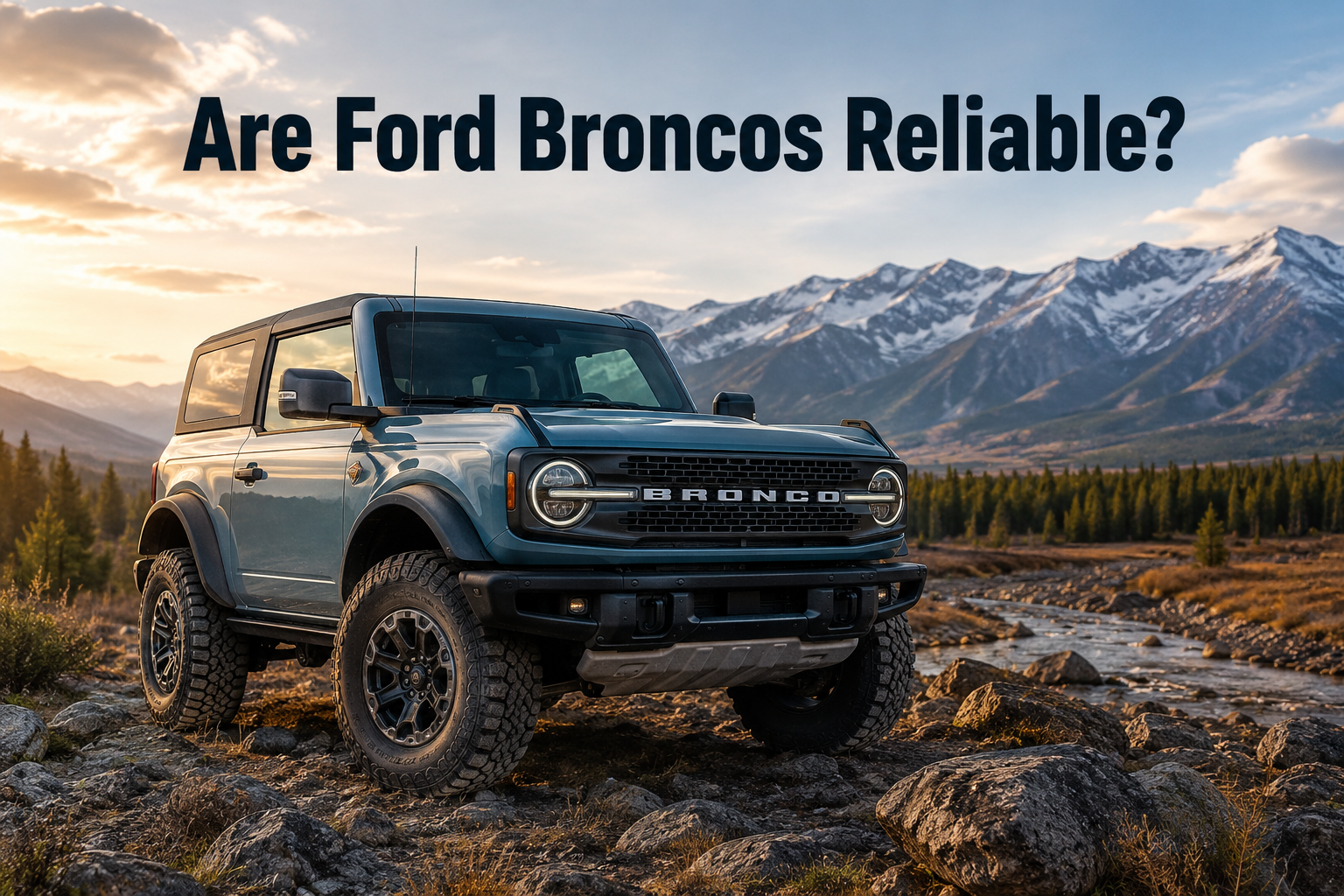


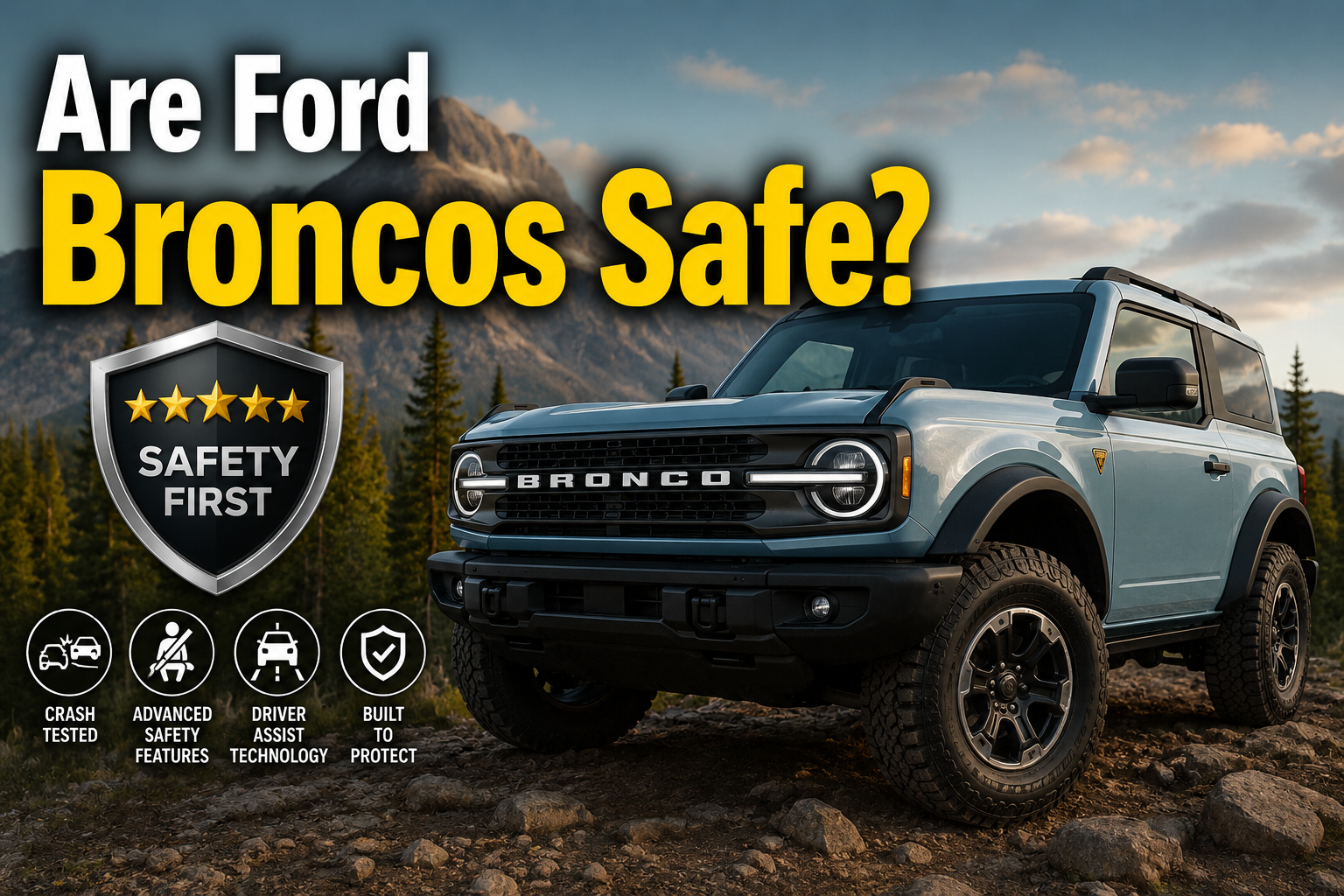
The Ford Bronco made a huge comeback in 2021 and quickly became one of the most talked-about SUVs on the market. Buyers love its rugged looks and off-road capability, but many still ask one important question before signing the paperwork: are Ford Broncos safe enough for daily driving and family use?
This guide breaks down official crash ratings, built-in safety technology, design factors, and how the Bronco stacks up against its biggest rivals so you can make an informed decision.
Ford Bronco Safety Ratings Overview
When people ask “are Ford Broncos safe,” the first place to look is official testing agencies. Two organizations lead this space, and their findings give a clear starting point.
IIHS Ratings Explained
The Insurance Institute for Highway Safety runs some of the toughest crash tests in the industry, including moderate overlap, side impact, and roof strength checks.
The Bronco has generally scored “Good,” the highest possible mark, across most of these categories. Certain trims have even qualified for Top Safety Pick status, though headlight performance has varied depending on the trim level chosen.
NHTSA Star Rating Breakdown
The National Highway Traffic Safety Administration uses a five-star system covering frontal, side, and rollover protection. The Bronco typically earns four to five stars overall, which is solid for a body-on-frame SUV built for off-roading.
The rollover score tends to be slightly lower than typical crossovers because of the vehicle’s taller stance and off-road-tuned suspension.
How It Compares to Similar SUVs
Compared to other rugged SUVs in its price range, the Bronco holds its own. It generally scores on par with or slightly better than the Jeep Wrangler in structural crash tests, mainly because Ford invested heavily in modern high-strength steel and reinforced door frames during development.
Standard & Available Safety Features
Ford didn’t just focus on off-road toughness; the Bronco also comes loaded with driver-assist technology. Most of these features are bundled into a single package available across trims.
Ford Co-Pilot360 Suite Explained
This is Ford’s signature safety technology bundle, and it comes standard on most Bronco trims. It includes automatic emergency braking, lane-keeping assist, blind spot monitoring, and adaptive cruise control on higher trims.
Together, these systems actively watch the road and step in when the driver might miss a hazard.
Airbag Systems and Structural Design
The Bronco uses a multi-airbag layout, including front, side, and curtain airbags designed to protect occupants in nearly every angle of impact.
The frame itself uses a mix of high-strength steel in key crumple zones, which helps absorb crash energy before it reaches the cabin.
Advanced Driver-Assist Tech on Higher Trims
Upper trims add extras like reverse sensing systems, a 360-degree camera, and trailer sway control. These features aren’t just conveniences; they genuinely reduce the chance of low-speed collisions and improve visibility during tricky maneuvers like parking or towing.
Crash Test Performance by Model Year
Safety scores aren’t fixed forever, and Ford has made small but meaningful updates since the Bronco’s relaunch. Reviewing performance year by year gives a clearer picture of long-term reliability.
2021–2022 Bronco Results
The earliest models after relaunch performed well overall, though early production units saw a few recalls related to steering and axle components. These issues were mechanical rather than structural and didn’t significantly affect crash test outcomes.
2023–2024 Updates and Changes
Ford refined production quality during this period, addressing many of the early complaints. Safety tech also expanded, with more trims getting adaptive cruise control and blind spot monitoring as standard rather than optional add-ons.
2025–2026 Model Improvements
Recent model years have focused on refining sensor accuracy for driver-assist features and improving headlight performance, which had previously held some trims back from top safety awards. These updates show Ford’s ongoing commitment to closing safety gaps.
Unique Design Factors Affecting Safety
The Bronco’s off-road identity brings some safety trade-offs that buyers should understand before purchase. These factors don’t make the vehicle unsafe, but they do change how it behaves compared to a standard crossover.
Body-on-Frame Construction Pros and Cons
This construction style is tougher for off-roading and towing since the frame absorbs stress separately from the body. On the downside, it typically results in a firmer ride and slightly different crash energy distribution compared to unibody SUVs.
Removable Doors and Roof Explained
The Sasquatch package and soft-top options let owners remove doors and roof panels for open-air driving. Testing has shown this doesn’t compromise structural integrity during a crash, since the core safety cage remains intact regardless of these removable panels.
Rollover Risk and Center of Gravity
Because the Bronco sits higher off the ground for better ground clearance, it carries a naturally higher center of gravity. This slightly raises rollover risk during sharp turns compared to lower-riding vehicles, though electronic stability control helps offset this in daily driving.
2-Door vs 4-Door Safety Differences
The 4-door model offers a longer wheelbase, which generally improves stability during highway driving and emergency maneuvers. The 2-door version is more nimble off-road but can feel slightly less planted at higher speeds on pavement.
Real-World Safety Considerations
Beyond lab testing, everyday driving conditions reveal how the Bronco actually performs for typical owners. This section looks at both off-road and on-road realities.
Off-Road Safety Features
Skid plates, front and rear tow hooks, and reinforced rocker panels protect the undercarriage during rough terrain use. These additions reduce the risk of damage-related failures when tackling trails, rocks, or uneven surfaces.
On-Road Handling and Stability
On paved roads, the Bronco feels composed thanks to standard stability control and responsive steering, even though its off-road tires and taller frame make it slightly less agile than a car-based SUV. Most drivers adjust quickly to this difference within the first few drives.
Common Owner-Reported Concerns
Some owners have mentioned wind noise from the removable roof and occasional water intrusion during heavy rain, particularly on early production units.
These are comfort-related issues rather than safety failures, and Ford has addressed many of them through running production changes.
Comparison to Competitors
Buyers often cross-shop the Bronco against a few well-known rivals. Here’s a quick side-by-side to simplify the decision-making process.
| Feature | Ford Bronco | Jeep Wrangler | Toyota 4Runner |
| IIHS Rating | Good (most trims) | Good with some Marginal scores | Good with some Acceptable scores |
| Standard Safety Tech | Extensive (Co-Pilot360) | Limited on base trims | Moderate |
| Rollover Risk | Moderate | Moderate to High | Moderate |
| Removable Doors/Roof | Yes | Yes | No |
Overall, the Bronco tends to offer more standard safety technology than the Wrangler, while the 4Runner leans more toward proven long-term reliability rather than tech-forward safety features.
Tips for Maximizing Bronco Safety
A few smart choices at purchase time and during ownership can noticeably improve real-world safety outcomes.
Choosing the Right Trim for Safety Priorities
Higher trims like Badlands or Wildtrak include more advanced driver-assist features as standard, making them a better pick for buyers who prioritize safety tech over base pricing.
Recommended Safety Add-Ons
Adding features like the 360-degree camera or trailer sway control, if not already included, can meaningfully reduce accident risk during parking, towing, or highway driving.
Safe Driving Practices for Off-Road Vehicles
Reducing speed on tight corners, avoiding sudden lane changes at highway speeds, and keeping tire pressure in check for the vehicle’s height all help minimize the Bronco’s slightly elevated rollover tendency.
Frequently Asked Questions
Is the Bronco safe for families?
Yes, especially in 4-door trims with Co-Pilot360 tech, though it’s built more for adventure-focused families than pure daily commuting.
Does removing the doors affect safety?
No, the core safety cage stays intact even with doors and roof removed, based on available crash testing data.
What’s the safest Bronco trim?
Higher trims like Badlands typically include more standard driver-assist features, making them a stronger safety choice.
How does the Bronco perform in rollover tests?
It scores slightly lower than typical crossovers due to its taller stance, though stability control helps offset this in everyday use.
Conclusion
So, are Ford Broncos safe? Based on current ratings and features, the answer is yes for most buyers, with strong crash test scores and a generous safety tech package across trims.
The main trade-off is a slightly higher rollover risk tied to its off-road design, which is common among similar rugged SUVs. For buyers who want off-road capability without sacrificing modern safety tech, the Bronco remains a solid and well-rounded choice.
Related Articles
How To Change Battery In Ford Key Fob? Easy Step-by-Step Guide
Is 1000A Amp Jumper Good For A 2007 Ford Escape?
Is Ford American Made? The Complete Truth About Ford’s Manufacturing
How To Turn Off Mykey Ford Without Admin Key? Complete 2026 Guide