






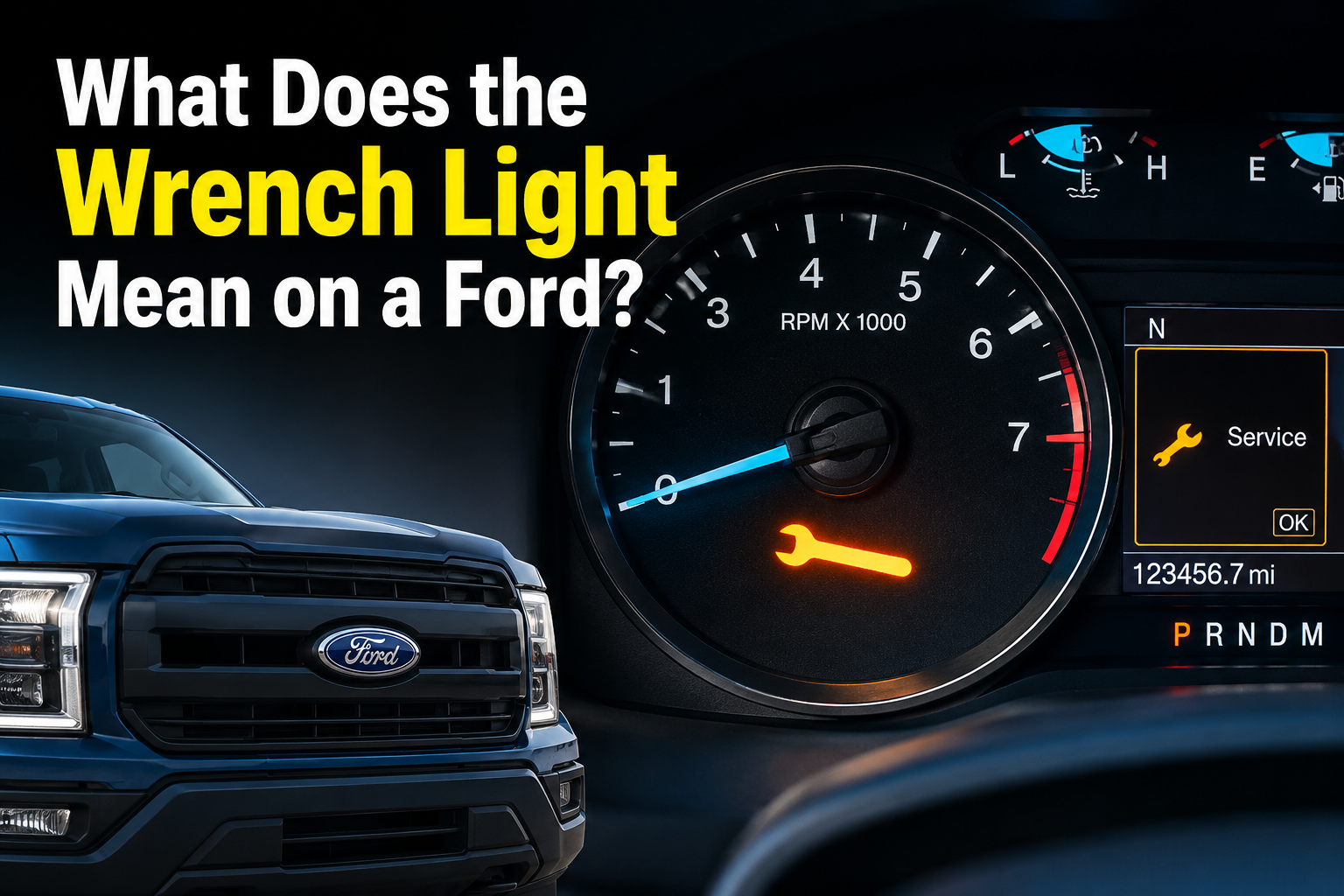
If you are driving your Ford and suddenly a small wrench symbol lights up on your dashboard, you are probably wondering what does the wrench light mean on a Ford and whether it is safe to keep driving.
In simple words, this light means there is a problem with your vehicle’s electronic throttle control system or powertrain, and your car may lose power until the issue is fixed properly.
What Is the Ford Wrench Light?
The wrench light on a Ford is a warning symbol shaped exactly like a mechanic’s wrench, and it usually appears in yellow or orange color on the instrument cluster.
This light is different from other dashboard warnings because it points directly to a mechanical or electronic control problem rather than a simple maintenance reminder.
Appearance and Location on the Dashboard
The wrench icon is normally placed near the speedometer or inside the main information display, depending on your Ford model. On many Ford vehicles, it appears alongside a small message saying “Powertrain Fault” or “Reduced Engine Power,” which makes it easy to identify compared to other symbols.
How It Differs From the Check Engine Light
Many drivers confuse the wrench light with the check engine light, but they are not the same thing. The check engine light usually relates to emissions or general engine sensors, while the wrench light is more specific to throttle control, transmission, and powertrain communication problems.
What Does the Wrench Light Actually Control?
This light is directly connected to your vehicle’s Electronic Throttle Control system and the Powertrain Control Module. These two systems work together to manage how your engine responds when you press the accelerator pedal.
Role of the Electronic Throttle Control System
The Electronic Throttle Control system replaces the old mechanical throttle cable with sensors and electronic signals. When something goes wrong in this communication, the wrench light appears as a signal that the system is not functioning as expected.
Role of the Powertrain Control Module
The Powertrain Control Module acts like the brain of your engine and transmission. It constantly receives data from multiple sensors, and if it detects an error in throttle response, sensor signals, or transmission shifting, it triggers the wrench light to alert the driver immediately.
Common Causes of the Wrench Light Turning On
There are several reasons why this warning light may appear, ranging from minor electrical glitches to more serious mechanical issues. Understanding these causes can help you decide whether it is a simple fix or something that needs urgent attention.
Faulty Throttle Body or Sensors
One of the most common reasons is a dirty or malfunctioning throttle body, which affects how air flows into the engine. Sensors attached to the throttle body can also wear out over time, sending incorrect signals to the control module.
Accelerator Pedal Sensor Issues
The accelerator pedal itself contains sensors that tell the engine how much power is needed. If these sensors become damaged or loose, the module cannot interpret your input correctly, which often triggers the wrench warning.
Transmission and Wiring Problems
Sometimes the issue is not the throttle at all but a transmission control fault or a loose wiring connection somewhere in the powertrain system. Corroded wires or damaged connectors can interrupt communication between different modules.
What Happens When the Wrench Light Comes On?
When this light appears, most Ford vehicles automatically enter a protective mode designed to prevent further damage to the engine and transmission. Drivers usually notice a significant change in how the car responds to acceleration.
Understanding Limp Mode
Limp mode is a safety feature where the vehicle intentionally reduces engine power and limits gear shifting. This is done so that even if there is a fault, you can still drive slowly to a safe location or repair shop instead of stalling completely.
Common Symptoms to Notice
Along with reduced power, drivers may experience delayed acceleration, rough idling, or unusual jerking while shifting gears. In some cases, the vehicle may also make a soft chime sound or display a written warning message on the dashboard screen.
Wrench Light vs Check Engine Light
Although both lights indicate that something is wrong, they serve different diagnostic purposes and should not be treated as identical warnings.
Key Differences Explained
The check engine light usually points to emission-related or sensor-based issues, while the wrench light focuses specifically on throttle and powertrain performance. When both lights appear together, it often indicates a more serious underlying problem that needs immediate diagnosis.
How to Diagnose the Problem
Proper diagnosis is essential before jumping into any repair, since the wrench light alone does not tell you the exact cause.
Using an OBD-II Scanner
An OBD-II scanner is the most reliable tool to identify the exact trouble code stored in your vehicle’s computer. Codes in the P0120 to P0124 range are commonly associated with throttle position sensor issues on Ford vehicles.
DIY Checks Versus Professional Diagnosis
While checking for loose wires or a dirty throttle body yourself is possible, deeper electronic faults require professional diagnostic equipment. A certified Ford technician can access manufacturer-specific data that a basic scanner may not show.
Step-by-Step Guide When the Light Appears
Knowing exactly what to do the moment this light turns on can prevent further damage and keep you safe on the road.
| Step | Action |
| 1 | Stay calm and avoid sudden or hard acceleration |
| 2 | Observe symptoms like stalling or power loss |
| 3 | Safely pull over and restart the vehicle |
| 4 | Use an OBD-II scanner to check the code |
| 5 | Visit a mechanic or Ford dealership for repair |
Immediate Actions to Take
As soon as the light appears, reduce your speed gradually and avoid aggressive driving, since the engine is already operating in a limited power state. Restarting the vehicle after safely parking can sometimes reset minor electronic glitches.
Common Ford Models Affected
This warning light is not limited to one model and has been reported across several popular Ford vehicles over the years.
Models Frequently Reporting This Issue
Ford Focus, Ford Escape, Ford Fusion, Ford F-150, and Ford Explorer owners have all reported this warning light at different points, often linked to throttle body wear or sensor aging as the vehicle gets older.
Repair Costs and Time Estimates
Repair costs can vary significantly depending on the exact cause identified during diagnosis.
| Repair Type | Estimated Cost |
| Diagnostic Scan | $50 to $150 |
| Throttle Body Replacement | $200 to $600 |
| Sensor Replacement | $100 to $300 |
| Labor Charges | $80 to $150 per hour |
Factors That Affect Total Cost
The final repair bill depends on your specific Ford model, the region you live in, and whether you choose a dealership or an independent mechanic. Genuine Ford parts usually cost more than aftermarket alternatives.
Can You Reset the Wrench Light Yourself?
Some drivers attempt to clear the light without professional help, though this should be done carefully.
Battery Disconnect Method
Disconnecting the car battery for a few minutes can sometimes reset the warning light if the issue was a temporary glitch. However, this method does not fix an actual mechanical fault, so the light may return soon after.
When Resetting Is Not Recommended
If the underlying problem is not fixed, clearing the code manually can be risky because you may unknowingly continue driving with a real mechanical issue that could worsen over time.
Preventive Maintenance Tips
Regular care can reduce the chances of this warning light appearing unexpectedly.
Routine Checks That Help
Cleaning the throttle body periodically, maintaining good battery health, and keeping your vehicle’s software updated through Ford service centers can all contribute to fewer electronic faults in the long run.
When to See a Mechanic Immediately
Certain warning signs mean you should not delay a professional inspection.
Serious Symptoms to Watch For
If your vehicle stalls repeatedly, loses power suddenly on the highway, or the wrench light appears alongside the check engine light, it is best to have it towed rather than risking further driving.
Frequently Asked Questions
Is it safe to drive with the wrench light on?
It is generally safe for short distances at low speed, but prolonged driving without repair can risk further damage.
Will the wrench light turn off on its own?
In rare cases of minor glitches it may turn off after a restart, but a persistent light needs proper diagnosis.
Does it affect fuel efficiency?
Yes, since the vehicle often runs in a reduced power mode, fuel efficiency can temporarily decrease.
Can weather affect the sensor?
Extreme cold or moisture can sometimes affect electrical connections, though this is not the most common cause.
Conclusion
Understanding what does the wrench light mean on a Ford helps you respond calmly instead of panicking on the road. In most cases, it points to a throttle, sensor, or powertrain communication issue that requires timely diagnosis using an OBD-II scanner.
While minor glitches can sometimes resolve after a restart, ignoring a persistent wrench light can lead to bigger repair costs later. Getting it checked by a trusted mechanic as soon as possible is always the safest choice for your Ford’s long-term performance.
Related Articles
What Does XLT Stand For on a Ford? Complete Trim Level Guide
What Does ST Stand For Ford? Complete Guide to Ford’s Performance Badge Explained
Does Ford Own Jaguar Land Rover? The Complete Ownership History Explained
Are Ford Expeditions Reliable? A Complete Year-by-Year Guide