





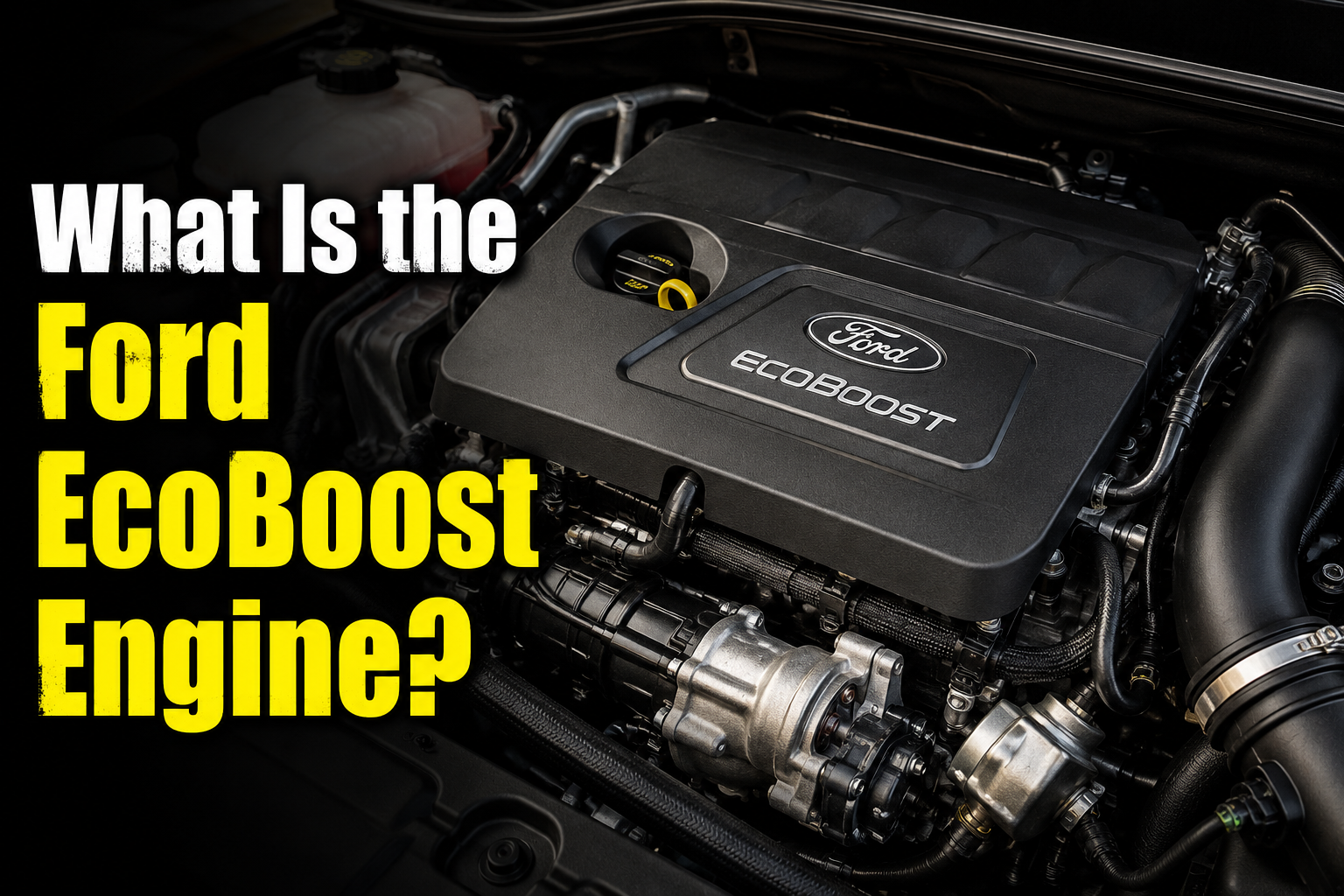
If you are asking what is the Ford EcoBoost engine, the simple answer is that it is a family of turbocharged, direct-injection gasoline engines built by Ford Motor Company to deliver strong power from a smaller engine size.
Instead of relying on large displacement to produce horsepower, EcoBoost engines use turbocharging and precise fuel injection to squeeze out more energy from less fuel. This approach allows a smaller engine to perform like a bigger one while still keeping fuel consumption lower.
Ford introduced this technology to meet rising demand for better mileage without asking drivers to give up performance. Today, EcoBoost engines are found in everything from compact hatchbacks to full-size pickup trucks. Understanding this engine family helps buyers make smarter decisions when choosing their next vehicle.
Why Ford Created EcoBoost Technology
Ford developed EcoBoost as a response to growing fuel economy regulations and customer demand for efficient yet powerful engines. The idea was simple: build smaller engines that do not compromise on driving performance.
The Fuel Economy Challenge
Automakers faced increasing pressure to reduce fuel consumption without weakening the driving experience customers expected. Ford needed a solution that satisfied both government standards and everyday drivers. EcoBoost became that middle ground, offering efficiency and strength together.
Meeting Performance Expectations
Buyers did not want to sacrifice power just to save fuel, especially truck owners who needed towing capability. Ford designed EcoBoost engines to match or exceed the performance of larger traditional engines. This made the technology appealing across very different vehicle categories.
The Technology Behind EcoBoost Engines
EcoBoost is not a single invention but a combination of three core technologies working together. Each one plays a specific role in boosting power while controlling fuel use.
Turbocharging Explained Simply
A turbocharger forces more compressed air into the engine’s cylinders than the engine could draw in naturally. More air combined with the right amount of fuel creates a stronger combustion process. This is how a small engine produces power similar to a much larger one.
Direct Fuel Injection
Direct injection sprays fuel straight into the combustion chamber instead of mixing it earlier in the intake pathway. This method allows more precise control over how much fuel is used at any given moment. The result is better efficiency and a cleaner burn during combustion.
Variable Valve Timing
Variable valve timing adjusts when the intake and exhaust valves open and close based on driving conditions. This flexibility helps the engine perform efficiently whether you are cruising or accelerating hard. It also contributes to smoother engine operation across different speeds.
Evolution of EcoBoost Engines Over Time
EcoBoost technology has changed significantly since it was first introduced, growing from a single engine option into an entire lineup. Ford has continuously refined the design based on feedback and testing.
The First Generation
The earliest EcoBoost engine launched as a 3.5-liter V6, aimed primarily at larger vehicles needing strong torque. It proved that turbocharged, direct-injected engines could reliably replace bigger naturally aspirated units. This success encouraged Ford to expand the lineup further.
Ongoing Improvements
Over the years, Ford refined turbo response, reduced lag, and improved long-term durability based on real-world driving data. Materials and internal engineering also became more advanced with each update. These refinements made newer EcoBoost engines noticeably smoother than earlier versions.
Different Types of EcoBoost Engines
Ford offers several EcoBoost engine sizes, each designed for a different type of vehicle and driving need. Smaller versions focus on efficiency, while larger versions focus on power and towing.
Small Displacement Options
The 1.0-liter three-cylinder and 1.5-liter four-cylinder EcoBoost engines are built primarily for compact and mid-size vehicles. They prioritize fuel savings while still offering enough power for daily commuting. These engines are common in smaller Ford models sold globally.
Mid-Range EcoBoost Engines
The 2.0-liter and 2.3-liter EcoBoost engines strike a balance between efficiency and stronger performance. The 2.3-liter version, in particular, is well known for its use in the Ford Mustang. These engines suit drivers who want a livelier driving feel without moving to a larger vehicle.
Larger EcoBoost Engines
The 2.7-liter and 3.5-liter V6 EcoBoost engines are designed for trucks and larger SUVs that need real towing strength. These engines deliver higher torque figures, which matters greatly for hauling and heavy loads. They remain some of the most popular choices in the Ford F-150 lineup.
Below is a simplified comparison of common EcoBoost engine sizes and their general use cases.
| Engine Size | Common Vehicles | Primary Focus |
| 1.0L | Compact cars | Fuel efficiency |
| 1.5L | Sedans, small SUVs | Balanced economy |
| 2.0L | SUVs, sedans | Everyday performance |
| 2.3L | Mustang | Sportier driving feel |
| 2.7L | F-150, SUVs | Towing and power |
| 3.5L | F-150, Explorer | Maximum towing capacity |
Vehicles That Use EcoBoost Engines
EcoBoost engines are spread across nearly every category of Ford vehicle, from small cars to heavy-duty trucks. This wide use shows how adaptable the technology really is.
Cars and Sedans
Models like the Ford Focus and Fusion have used EcoBoost engines to improve fuel economy without feeling underpowered. These vehicles benefit from smoother daily driving and lower running costs. It made EcoBoost a natural fit for budget-conscious drivers.
SUVs and Crossovers
The Ford Escape, Edge, and Explorer all rely on various EcoBoost engine sizes depending on trim level. These vehicles need a balance of power for passengers and cargo, along with reasonable fuel consumption. EcoBoost engines fulfill both needs effectively.
Trucks and Commercial Use
The Ford F-150 is one of the most well-known vehicles to use larger EcoBoost engines for serious towing tasks. Fleet and commercial buyers often choose these engines for their combination of strength and efficiency. This has made EcoBoost a major part of Ford’s truck strategy.
Advantages of EcoBoost Engines
EcoBoost engines offer several real-world benefits that explain their popularity among everyday drivers and truck owners alike.
Better Fuel Economy
Because these engines are smaller yet forced to produce more power efficiently, they generally use less fuel than larger traditional engines. This can lead to noticeable savings over months of regular driving. It remains one of the biggest selling points of the technology.
Strong Power From a Compact Design
EcoBoost engines prove that engine size does not always determine performance. Turbocharging allows smaller engines to match the output of much larger units. This gives buyers flexibility without forcing a compromise on power.
Common Concerns With EcoBoost Engines
No engine technology is perfect, and EcoBoost has its own set of concerns that potential buyers should understand.
Turbo Lag and Response
Some older EcoBoost engines experienced a slight delay before full power kicked in, known as turbo lag. Newer versions have significantly reduced this issue through improved turbo design. Still, it remains a consideration for performance-focused drivers.
Long-Term Maintenance Needs
Turbocharged engines generally require more attentive maintenance, including proper oil changes and cooling system checks. Skipping regular service can shorten the lifespan of turbo components. Owners who stay consistent with maintenance typically avoid major issues.
EcoBoost vs Traditional Engines
Comparing EcoBoost to naturally aspirated engines helps clarify why Ford shifted much of its lineup toward turbocharged options.
Power Delivery Differences
Naturally aspirated engines rely purely on engine size for power, while EcoBoost engines use forced air induction to boost output. This means a smaller EcoBoost engine can outperform a larger non-turbo engine in some cases. The driving feel, however, can differ slightly between the two.
Fuel Efficiency Comparison
EcoBoost engines generally offer better fuel efficiency thanks to their smaller size and smarter fuel delivery systems. Traditional larger engines often consume more fuel simply due to their size. This efficiency gap becomes more noticeable during highway driving.
Maintenance Tips for EcoBoost Owners
Taking care of an EcoBoost engine properly helps ensure long-term reliability and smooth performance.
Oil Change Importance
Using the manufacturer-recommended oil type and following strict change intervals protects the turbocharger from unnecessary wear. Skipping oil changes can lead to buildup that damages internal components over time. Regular oil maintenance is one of the simplest ways to protect the engine.
Cooling System Care
Turbocharged engines run hotter than naturally aspirated ones, making the cooling system especially important. Checking coolant levels and hoses regularly helps prevent overheating issues. This small habit can significantly extend engine lifespan.
Cost Considerations for EcoBoost Vehicles
Buyers often want to know whether EcoBoost vehicles cost more to purchase or maintain compared to standard engine options.
Purchase Price Differences
Vehicles equipped with EcoBoost engines sometimes carry a slightly higher upfront price due to the added turbo technology. This price difference is often balanced out by long-term fuel savings. Buyers should weigh both short-term cost and long-term value together.
Fuel Savings Over Time
Because EcoBoost engines are generally more fuel-efficient, owners often save money gradually through reduced fuel consumption. Over several years, these savings can offset the initial price gap. This makes EcoBoost a reasonable investment for long-term ownership.
Frequently Asked Questions
Is the Ford EcoBoost engine reliable? Yes, when properly maintained, EcoBoost engines are generally reliable and have been used successfully for over a decade across many Ford models.
Does EcoBoost require premium fuel? Some EcoBoost engines recommend premium fuel for optimal performance, though many can run on regular fuel without major issues.
How long do EcoBoost engines typically last? With proper maintenance, most EcoBoost engines can last well beyond 150,000 miles, similar to many traditional engines.
Is EcoBoost good for towing? Yes, especially the larger 2.7L and 3.5L versions, which are specifically designed for strong towing performance in trucks.
Are EcoBoost engines expensive to repair? Repair costs can be slightly higher than non-turbo engines due to added components, but routine maintenance helps avoid major expenses.
Conclusion
Understanding what is the Ford EcoBoost engine helps buyers see why this technology has become such a major part of Ford’s lineup.
By combining turbocharging, direct injection, and variable valve timing, Ford created engines that balance power and efficiency effectively. Whether in a compact car or a heavy-duty truck, EcoBoost engines offer real benefits for everyday drivers.
With proper maintenance, they remain a dependable and practical choice for many vehicle owners today.
Related Articles
How to Change Ford Door Code Without Original Code: A Complete Step-by-Step Guide
How Much Does a Ford Raptor Cost in 2026? Full Price Breakdown
Are Ford Broncos Safe? Complete Safety Ratings & Features Guide 2026
Does Ford Own Jaguar Land Rover? The Complete Ownership History Explained